3PL and third party logistics glossary - common concepts and terms
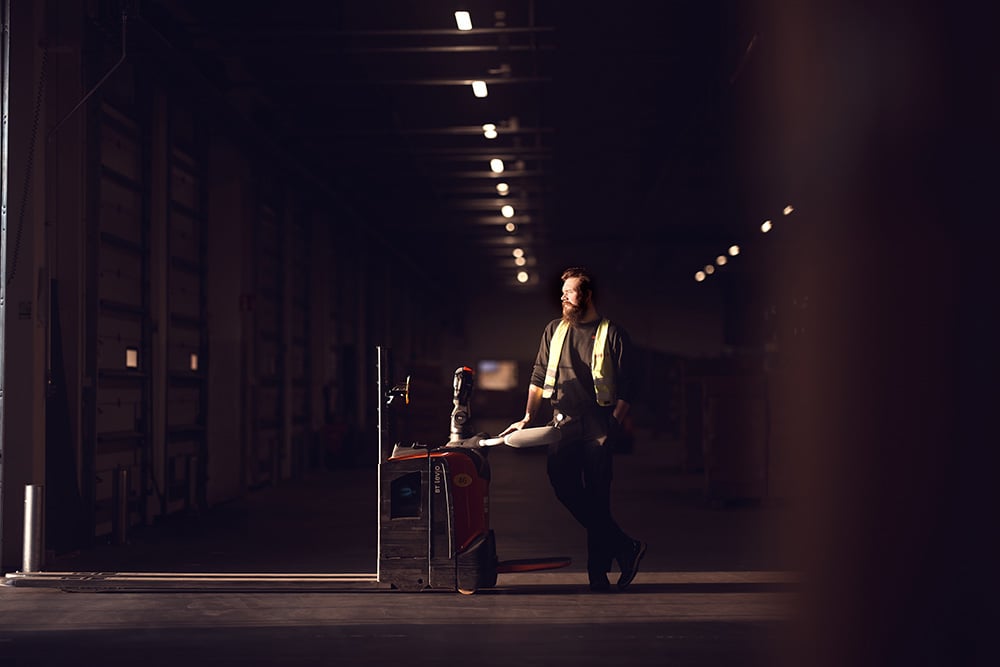
Navigating the logistics world can be challenging – especially with all the technical jargon. This glossary explains common terms in 3PL (Third Party Logistics) to help you understand how it works and how it can add value to your business.
Glossary 3PL Logistics A-Z
-
3PL (Third Party Logistics)
An external logistics partner that manages parts or the entire supply chain – such as warehousing, fulfillment, and distribution.
-
AGV (Automated Guided Vehicle)
Driverless trucks or robots that automatically transport goods within a warehouse.
-
Autostore
An automated warehouse system where goods are stored in bins in a compact grid and retrieved by robots.
-
Batch picking
Picking multiple orders simultaneously to streamline the process.
-
Cantilever rack
Racking for long goods such as pipes, planks, or profiles – with arms extending from a vertical frame.
-
Conveyor system
A system of conveyor belts used to move goods within a warehouse – manual or automated.
-
Counterbalance truck
A common type of forklift where the weight in the rear balances the load on the forks.
-
Cross-docking
Goods are transferred directly from inbound to outbound transport without storage.
-
Deep stacking rack
Racking where multiple pallets are stored behind each other – ideal for large volumes of the same item.
-
Dropshipping
A sales model where the product is shipped directly to the end customer without the seller handling inventory. Traditionally, this happens from the supplier’s warehouse, but it can also involve a 3PL partner that stores and ships goods on behalf of the e-commerce business. For the customer, it appears as if the product comes directly from the seller, while logistics are managed by an external provider.
-
EDI (Electronic Data Interchange)
Digital information exchange between systems - e.g. orders, invoices and shipping notifications.
-
FIFO / LIFO
Warehouse principles: First In First Out and Last In First Out - determines how goods are picked and stored.
-
Flow rack
Racking where goods roll forward automatically using inclined tracks – often used for FIFO handling.
-
Fulfillment
The process from order receipt to delivery - includes warehousing, picking, packing and shipping.
-
Inbound
The flow of goods into the warehouse - e.g. from suppliers.
-
Inventory turnover rate
Indicates how quickly inventory is sold and replaced.
-
IoT (Internet of Things)
Connected devices and sensors that collect real-time data – e.g., temperature monitoring, goods tracking, or machine status.
-
Lead time
The time from when an order is placed until it is delivered.
-
Last Mile Delivery
The last part of the supply chain - from distribution point to end customer.
-
Low-level order picker
A truck where the operator stands on a platform and picks goods from lower levels.
-
Machine learning / AI
Used to optimise stock placement, predict demand, and improve picking efficiency.
-
Mezzanine floor
An extra floor level in the warehouse that creates more space for picking, packing, or offices.
-
Outbound
The flow of goods out of the warehouse - e.g. to the consumer or retailer.
-
Outsourcing
Delegating logistics functions to an external partner.
-
Pallet truck / Walkie stacker
A truck for moving pallets short distances - often with a standing platform for the operator.
-
Pallet racking
Shelving system for storing EUR pallets
-
Pick and pack
Manual or automated handling of orders in the warehouse.
-
Picking stations
Workstations where picking and packing take place – can be manual or automated.
-
Pick-to-light / Put-to-light
Technology where light signals guide picking or restocking in the warehouse.
-
Rack beams
The horizontal components in pallet racks that support the pallets.
-
Rack uprights
The vertical parts that make up the scaffolding structure - often anchored to the floor.
-
Reach truck
A forklift with an extendable mast that allows the operator to reach high up in storage racks.
-
Reverse logistics
The process of receiving, inspecting, and handling returned products.
-
RFID (Radio Frequency Identification)
Technology to track products using radio waves - faster than traditional barcode scanning.
-
Scaffolding nets / fall protection
Nets installed on racks to prevent goods from falling – important for workplace safety.
-
Shelf rack
Used for smaller products that are not stored on pallets. Common in picking warehouses for e-commerce.
-
SLA (Service Level Agreement)
An agreement defining service levels between customer and the 3PL provider.
-
SKU (Stock Keeping Unit)
Unique identifier for a product in inventory.
-
Sorters
Automated systems that sort parcels or products based on destination, size, or weight.
-
Stacker
A simple forklift for lifting and stacking pallets - available in both manual and electric versions.
-
TPL (Third Party Logistics)
An alternative abbreviation for 3PL - sometimes used in European contexts.
-
VAS (Value-Added Services)
Services beyond traditional warehousing and transport – such as labeling, repacking, assembly, quality control, or customized solutions. VAS creates added value and can be crucial for streamlining flows or meeting specific customer requirements.
-
Very Narrow Aisle (VNA) truck
A truck used in very narrow aisles, often with automated steering.
-
Voice Picking
A method of picking where warehouse staff receive instructions via voice-controlled systems.
-
Warehouse layout
Planning the placement of warehouse equipment to optimise flows, safety and capacity.
-
WMS (Warehouse Management System)
IT systems that manages and optimises warehouse operations.
Do you need a logistics solution and a 3PL provider you can trust?
Want to know how we can help your business take logistics to the next level?
We'll take care of it!
We'd love to tell you more about our sustainable 3PL and transportation management solutions and how we can create sustainable value together.