Glossary for transport & freight forwarding - common concepts & terms
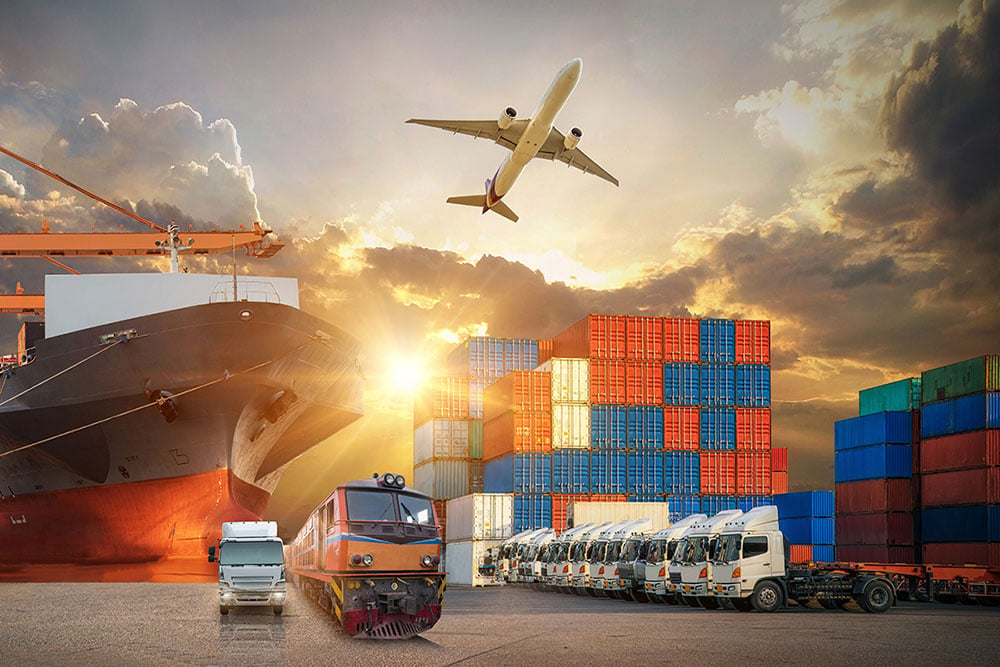
Transportation and freight forwarding are key parts of the logistics flow, but the terminology can be technical and hard to keep track of. Here we’ve gathered and explained common terms in transport, shipping, and forwarding to make it easier to understand how it works, whether you’re dealing with domestic deliveries, international trade, or logistics planning.
Glossary Transport & Freight Forwarding A-Z
-
ADR
A regulatory framework for the transportation of dangerous goods by road within Europe. Includes requirements for labeling, documentation, and training.
-
Air Freight
Transport of goods by air - used for fast and international deliveries.
-
Cabotage
Transport within a country by a foreign transport company - regulated by EU legislation.
-
Cargo
Goods being transported - can be general cargo, bulk, container or special cargo.
-
Carrier
The company performing the actual transport - e.g. a trucking company, an airlines, or shipping line.
-
Carrier Management
The strategic management of relationships with carriers - including contracts, performance monitoring, and compliance.
-
CFS (Container Freight Station)
A terminal where goods are consolidated or deconsolidated for container transport.
-
CMR
Convention on the Contract for the International Carriage of Goods by Road - regulates liability and conditions between consignor and carrier.
-
CO₂ footprint
The amount of carbon emissions generated by a transport – used to measure climate impact.
-
Consignee
The party receiving the goods - responsible for receiving and making any claims.
-
Consignor
The party sending the goods – responsible for correct documentation and packaging.
-
Cross Trade
Transport where neither the sender nor the receiver is located in the country where the transport takes place.
-
Customer Portal
Web interface where the customer can book shipping, track shipments, and access documents.
-
Customs Invoice
A document used for export to declare the value and content of the goods.
-
Delivery Terms
Agreed terms for how and when goods are delivered – often based on Incoterms.
-
DHL / UPS / FedEx
Examples of global transport and courier companies offering express deliveries.
-
EDI (Electronic Data Interchange)
Digital exchange of information between systems – e.g., booking, tracking, and invoicing.
-
Environmental Certification
For example, ISO 14001 - shows that a company works systematically with environmental issues.
-
Export
Shipping goods to another country – requires customs clearance and export documentation.
-
FCL (Full Container Load)
Container transportation where an entire container is booked by one shipper.
-
Freight
Transpor of goods from one location to another - can be by road, air, rail, or sea.
-
Freight Analysis
Review of actual freight costs versus contracted rates – used to identify discrepancies and savings opportunities.
-
Freight Forwarding
A service where a forwarder organizes and books transport – including documentation and customs clearance.
-
Freight Procurement
The process where a company compares and selects carriers based on price, quality, and capacity.
-
General cargo
Goods transported as individual units - e.g. pallets, boxes, or machinery.
-
Green Logistics
Logistics solutions focused on the environment and sustainability - e.g. fossil-free transports and energy-efficient vehicles.
-
Import
Bringing goods into a country – requires customs clearance and import documentation.
-
Incoterms
International commercial terms defining responsibilities, costs, and risks between buyer and seller.
-
Intermodal Transport
Transport combining several modes - e.g. train and truck.
-
JIT (Just In Time)
A transport strategy where deliveries are made exactly when they are needed - minimizing inventory requirements.
-
LCL (Less than Container Load)
Container transport where goods share space with other shipments
-
Load Carriers
A unit used to transport goods – e.g., pallet, container, box.
-
Load Planning
Optimising how goods are placed in vehicles to maximise capacity and safety.
-
Logistics System
Digital systems that manage transport booking, tracking, invoicing, and documentation.
-
Overload
When a vehicle is loaded beyond the allowed weight – can lead to fines and safety risks.
-
Parcel
A smaller shipment - often handled by courier or postal services.
-
Rail Freight
Transport of goods by rail – environmentally friendly and efficient for long distances.
-
Return Transport
Transport of goods back to the sender - e.g. for returns or recycling.
-
Road Freight
Transportation of goods by truck - the most common mode of transport fordomestic distribution.
-
Route Optimization
Planning transport routes to minimize distance, time, and emissions.
-
Sea Freight
Transport of goods by ship – cost-effective for large volumes and long distances.
-
Single Point of Contact (SPOC)
A dedicated contact person or function at the logistics partner responsible for handling all transport-related communication.
-
TA system
A system for managing bookings, labels, freight documents, and tracking – often integrated with ERP systems.
-
TMS (Transport Management System)
A system for planning, booking, and monitoring transports – often integrated with ERP.
-
Tracking
Real-time tracking of goods - shows where the shipment is located.
-
Transport Booking
Booking freight via systems or manually - often an outsourced service.
-
Transport Optimization
Analysis and improvement of transport flows to reduce costs, lead times, and environmental impact.
-
Waybill
A document containing information about the goods, the consignor, the consignee, and the transport conditions.
Do you need a partner for your transportation management?
Want to know how we can help your company streamline your freight management and lower your transportation costs?
We've got you covered!
We'd love to tell you more about our sustainable 3PL and transportation management solutions and how we can create sustainable value together.