3PL third-party logistics - a guide
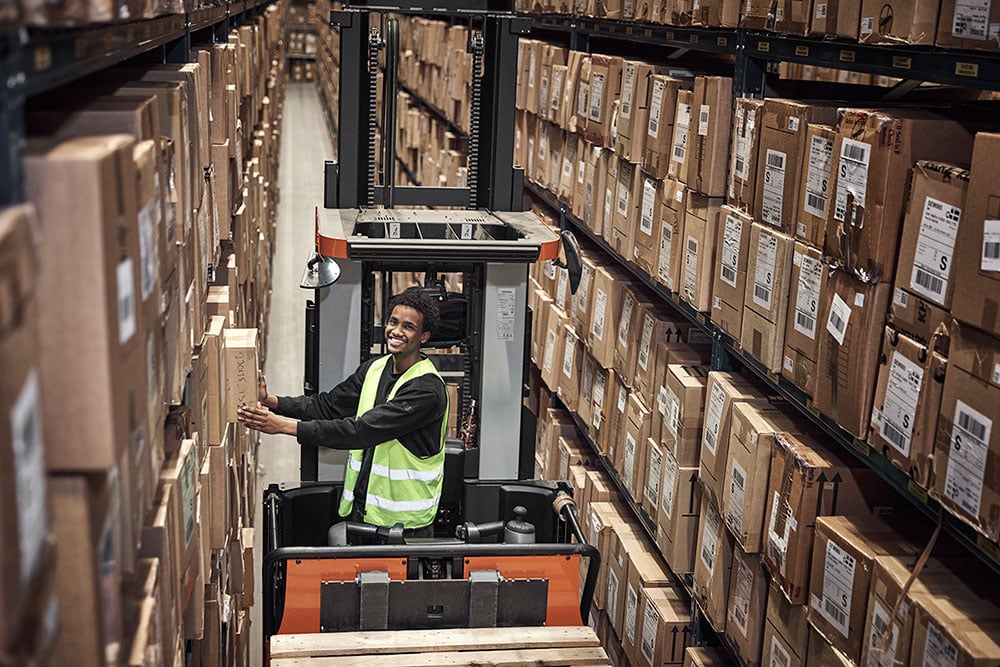
3PL, third-party logistics or TPL – a beloved concept with many names. In this guide, we’ve gathered everything you need to know about how third-party logistics works, what services are included when you outsource your warehouse management, and how it can strengthen your business. Here you’ll find answers to your questions – and maybe even to questions you didn’t know you should ask. We’ll guide you through concepts, benefits, pitfalls, and practical tips so you can make well-informed decisions about your logistics solution and choose the right 3PL partner for your needs.
What is 3PL?
3PL stands for Third Party Logistics – or TPL – and translates to “tredjepartslogistik” in Swedish. It’s a model where a company hires an external logistics partner to manage all or parts of its logistics flow. Third-party logistics means a third party handles processes such as storage, deliveries, and returns. Inventory management, customer service, and financial services can also be managed by the logistics partner.
A 3PL provider acts as an extension of your business and takes responsibility for the operational parts of logistics – from the moment goods arrive until they are delivered to the end customer. This includes goods reception, quality checks, registration, warehousing, picking and packing, handling transport documents, customs clearance, and shipping.
In short, 3PL means that a company outsources all or parts of its logistics.
Examples of 3PL solutions
Companies using logistics services from a 3PL provider often do so to streamline their logistics flows, whether they sell to other businesses (B2B) or directly to consumers (B2C). There are several different setups for 3PL solutions, depending on needs and structure. Here are some common examples:

Facilities
Logistics can either be managed in your own facilities or in the 3PL provider’s facilities. The latter is the most common and usually the most efficient setup.

Staff
Either your own staff handles logistics, or the 3PL provider supplies the staff. Again, the latter is most common as it’s the most flexible and cost-effective solution.

Dropshipping
Simply put, dropshipping via 3PL means they deliver directly to your customer’s customer, often a consumer. The end customer places an order via e-commerce, which goes straight into the 3PL’s system for handling and shipping directly to the buyer.
What is the difference between 3PL and 4PL?
While 3PL focuses on handling inventory and goods, a 4PL provider never sees the physical products. Instead, a 4PL provider offers services related to logistics. This can include acting as an intermediary between you and the TPL provider, supporting procurement, serving as a control tower, or offering invoicing services.
An example of a 4PL service is Transport Management. In this case, the 4PL provider focuses on optimizing transport solutions and securing the best transport agreements. Based on data analysis, negotiations, and procurement, they deliver the most cost-effective transport solution for your company. A 4PL logistics partner compares, books, and tracks your shipments across multiple carriers.
What are the benefits of third-party logistics?
Today, it’s common to hire a 3PL provider to manage storage and deliveries. Outsourcing logistics offers several advantages. The biggest one is that you can focus on your core business, do what you do best, and put your energy where it matters most. But there are more.
Ousourcing to 3PL provides skill advantages
You don’t need in-house expertise – you outsource to professionals in the field. They stay updated on trends and developments to always offer modern solutions. You get a cutting-edge logistics solution where the provider helps you store smarter, make continuous improvements, optimise warehouse flows, and invest in system upgrades.
Hiring a 3PL-partner brings benefits regarding facilities
Outsourcing logistics to a third party means you don’t need your own facilities. Nor do you need to invest in and maintain forklifts, expensive automation solutions, or IT systems.
Outsourcing logistics provides economies of scale
Outsourcing your logistics means you only pay for what you use, which is a huge financial advantage. Costs become flexible. For companies with seasonal variations, this is a major benefit, but it also helps if you have other fluctuations in volume and demand. If there’s a dip, your costs for space and staff drop too, since you’re not locked into your own solutions. Plus, you avoid heavy investments when your business grows and peaks.
What are the disadvantages of 3PL?
Yes, there can be downsides to third-party logistics if you don’t find the right partner. You’re outsourcing a core function, so it’s important to get it right. Ideally, you should have an internal resource who understands logistics processes and can act as a bridge between your company’s other functions and the 3PL provider. This enables analysis and corrective actions. For logistics to work optimally, for example, the right products must be purchased in the right quantities. Everything is connected.
How to choose the right 3PL and logistics provider
How do you choose a 3PL provider or TPL? There are several evaluation criteria when selecting a logistics partner, and you need to think much like when hiring a new employee. The provider becomes an extended part of your company, so you need to “click.” A successful partnership is built on good communication and a close relationship. That’s when it works best – and is cheapest in the long run. Besides chemistry, there are other factors to consider when choosing a logistics partner:

Geographical location
Start from where your customers and suppliers are. It should be easy to receive incoming goods while ensuring optimal deliveries to customers. For example, if you deliver to Scandinavia, it’s advantageous to place logistics on the west coast. Choose a 3PL provider with a location that fits your inbound and outbound flows.

Proximity
Logistics is a strategic function. Crucial to the success of your business. Therefore, your TPL-partner becomes an integral part of your business. That's why it makes sense for them to be located not too far from your business.

Facilities & technology
Facilities, technology, automation, systems – all are important factors when evaluating a logistics provider. Are the facilities optimally designed? Are technology and automation solutions state-of-the-art? Are there digital systems that create the best conditions? How do they work with transparency, feedback, and continuous improvement? All these are critical success factors to assess before deciding which 3PL provider will handle your logistics.
What does third-party logistics cost?
The cost of a 3PL solution naturally varies depending on your requirements and which services are included. Pricing models can differ between providers.
Storage
When it comes to storage with a TPL provider, you typically pay a monthly fee for a storage space. This could be a pallet position, shelf space, an area in square meters, or a volume in cubic meters. The cost varies depending on the value, size, and weight of the goods, and the type of product.
Inbound & Outbound services
Costs for a TPL’s handling of inbound deliveries, picking, and packing are often charged per hour, but it’s also common to pay per purchase order or customer order, per order line, or per unit. The most common model is a combination of these.
Replenishment, inventory and other ancillary services
For replenishment in the warehouse, inventory checks, and other warehouse services, you pay per hour, per replenishment, or per inventory count. There’s no standardised pricing model here, so rates vary.
3PL systems
To manage inventory, companies use warehouse systems or WMS (Warehouse Management System). There are two ways to work in a shared WMS – either both parties use the customer’s system or the 3PL provider’s system. A shared WMS at the 3PL provider is preferable because it makes operations more efficient. It’s easier to implement improvements and maintain flexibility in staffing.
Most 3PL companies are connected to Transport Administration Systems (TA systems) to offer traceability and the ability to consolidate multiple parcels into one larger shipment.
KPIs and KPI Template for 3PL
Outsourcing your logistics management requires the customer and provider to set up and agree on KPIs to measure, monitor, and evaluate the partnership. Examples of KPIs include:
- Picking accuracy - picking the right items, in the right quantity, for the right customer
- Delivery accuracy - correct items, on time, to the right location
- Inbound lead time - time from goods arrival to availability for sale
- Delivery lead time - time from order placement to dispatch from the warehouse
- Inventory reliability - discrepancies between stock levels and ERP balances
- Returns handling - time from arrival until the item is available for sale
- Logistics cost per unit/line
Trends in 3PL
More and more people are seeing the benefits of outsourcing their logistics, and interest in 3PL is growing. In addition to the industry's growth, we also see other trends.
Customised logistics and tailor-made solutions
Companies no longer just want storage; they want flexible, scalable, and industry-specific solutions. Different business models and products impose different requirements. More 3PL providers are specialising in certain areas or industries. It’s hard to be the best solution for everyone.
Automation and robotics
Robotic warehouses, AMRs (Autonomous Mobile Robots), and AI-driven picking optimisation are growing rapidly. Investments are increasing even among mid-sized logistics companies, not just the largest ones. E-commerce growth is driving automation. Solutions like AutoStore and other robotics optimize warehouse flows and boost productivity.
Digitalisation and transparency
Digitalisation isn’t new, but it’s an ongoing process. WMS and transport administration systems are being refined, and manual handling is increasingly system-based. Customers want real-time visibility into inventory status, forecasts, KPIs, and order flows.
Green logistics and sustainability requirements
More customers demand climate-neutral, recycling-optimised, and energy-efficient logistics solutions. Environmental performance is becoming business-critical, not just an image factor. Today, there’s a strong focus on making logistics more sustainable. More providers are installing solar panels on warehouse roofs to meet climate goals. Solutions for sustainable packaging materials and recycling are being explored. Transport is another area where major changes are happening, with increased use of electric vehicles. To further reduce transport emissions, solutions are being developed to minimise shipping “air” by optimising packaging sizes and using systems and machines that calculate optimal packaging.
Nearshoring & regional logistics
To reduce risks in global supply chains and enable faster deliveries, more companies choose 3PL providers with local hubs close to the end customer.
Do you need a logistics solution and a 3PL provider you can trust?
Want to know how we can help your business take logistics to the next level?
We'll take care of it!
We'd love to tell you more about our sustainable 3PL and transportation management solutions and how we can create sustainable value together.